
There is a reason why Egypt’s Red Sea is etched into the bucket list of every serious diver and underwater photographer. While the pyramids draw millions to Giza, a different kind of ancient wonder lies beneath the surface of the Red Sea.
If you have ever dreamed of drifting over walls of coral that drop into the abyss, coming eye-to-eye with a curious dolphin, or feeling the adrenaline rush of a shark encounter, then it’s time to stop dreaming and start booking. But to truly experience the Red Sea in all its glory, you need to do it from the deck of a liveaboard.
Here is everything you need to know about this bucket-list adventure.
Why a Liveaboard?
If you’ve only ever done day boats from resorts in Hurghada or Sharm el Sheikh, you’ve only scratched the surface. The Red Sea is vast, and the best dive sites are often a 4 to 12-hour cruise away from the marina.
Liveaboards offer three major advantages:
- Access: They take you to the remote reefs like the Brothers Islands, Daedalus Reef, and Elphinstone—sites inaccessible to day boats.
- Efficiency: You wake up, roll out of bed, and drop into the water. No long bus rides to the marina, no waiting for crowds. You can easily log 3 to 4 dives a day at a relaxed pace, with some itineraries offering a night dive to round things out.
- The Atmosphere: There is nothing quite like the camaraderie built on a liveaboard. Sharing meals, sunsets, and dive stories with a small group of fellow ocean lovers creates a bond that lasts long after the tan lines fade.
The Xplorer Experience
If you are looking for a liveaboard that blends modern comfort with the rugged capability needed to chase the best sightings, the Xplorer is a standout option in the Egyptian fleet.
Designed specifically for the Red Sea, Xplorer offers a spacious layout that minimizes crowding—something rare on a dive boat. The dive deck is meticulously organized, allowing for quick gear setups and easy entries, which is essential when you are jumping in to catch a hammerhead sighting at Daedalus or gearing up for a dawn dive at the Brothers. With spacious cabins, excellent food, and a crew that knows the reefs intimately, Xplorer strikes the perfect balance between luxury and expedition-style diving. It is an ideal choice for divers who want to cover the iconic routes (like the B.D.E.) without compromising on comfort.
The Itineraries: North vs. South vs. Deep South
Choosing the right route is crucial. The Red Sea offers vastly different experiences depending on how far south you go.
The Classic: Northern Routes (Sharm el Sheikh / Hurghada)
This is the best route for beginners and wreck enthusiasts.
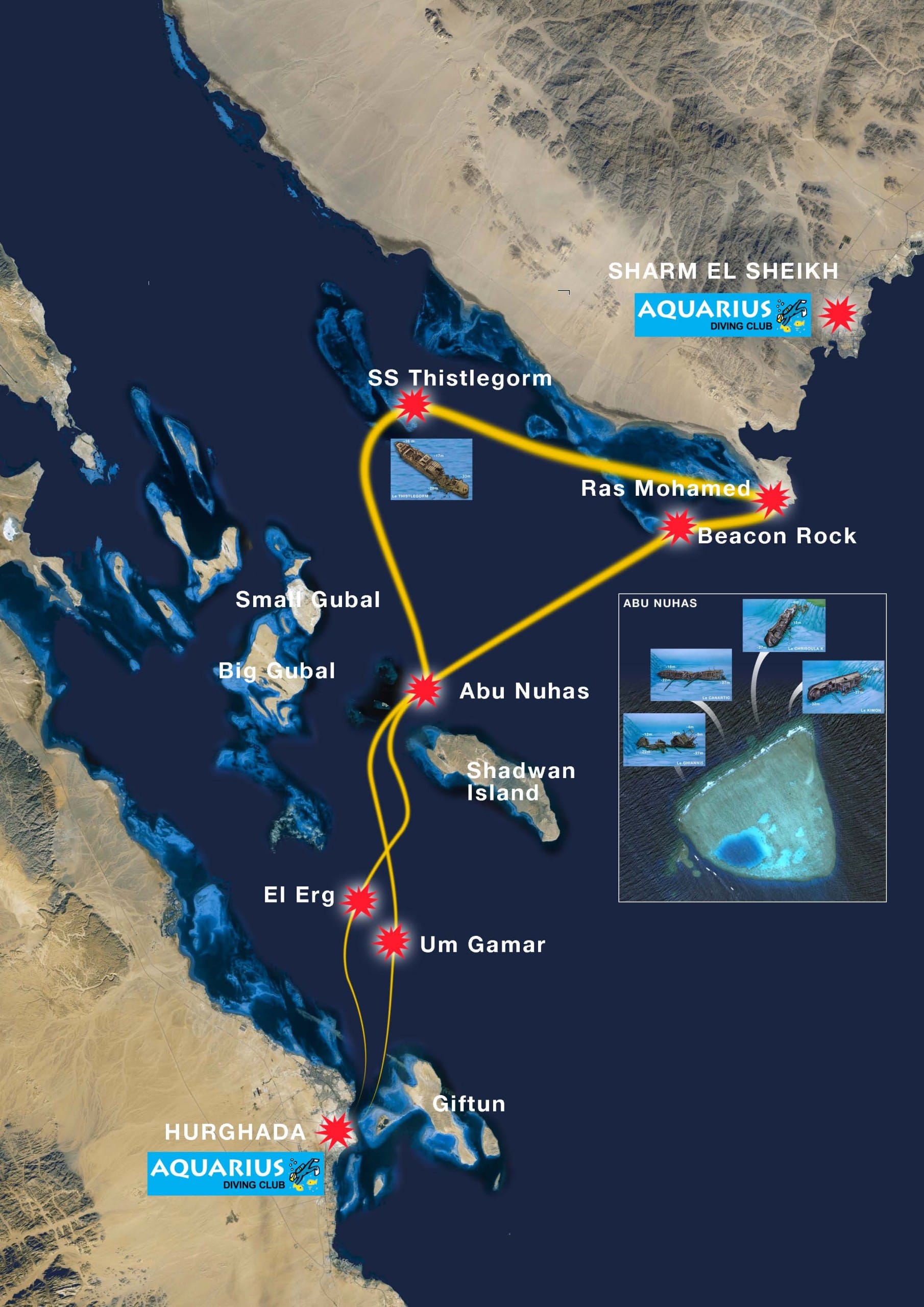
- Highlights: The SS Thistlegorm. This WWII British transport ship is arguably the most famous wreck dive in the world. Resting on the bottom of the Strait of Golan, it’s packed with Bedford trucks, motorcycles, and aircraft fuselages.
- Also on the menu: The Ras Mohammed National Park, the drift dives at Ras Muhammad, and the Straits of Tiran with its pristine coral gardens.
The Adventurous: Brothers, Daedalus & Elphinstone (B.D.E.)
This is the “Goldilocks” route—moderate travel time with massive rewards. This is where you come for the big stuff.
- The Brothers: Two islands (Big Brother and Little Brother) jutting out of the deep blue. They feature lighthouses, the wrecks of the Aida and Numidia, and are a cleaning station for pelagics. Expect sharks (Oceanic White Tips, Threshers, and Hammerheads) cruising the walls.
- Daedalus: A reef in the middle of nowhere. It’s a magnet for Hammerhead schools during the summer months.
- Elphinstone: Famous for its “shark window”—a plateau where you can kneel in the sand and watch Grey Reef and Oceanic White Tip sharks patrol the current.
The Remote: Deep South (St. John’s, Fury Shoal, Rocky & Zabargad)
For those who have done the north and want pristine, untouched coral, the deep south is the answer. This is an expedition. The reefs here are healthier, less pressured, and the topography is stunning. Zabargad Island is famous for its crystal-clear water and the chance to find tiny gems (peridot) on the beach, while Rocky Island offers sheer walls covered in soft corals.
What to Expect on Board
Modern Egyptian liveaboards vary from “budget-friendly” to “ultra-luxury,” but the standard setup is consistent:
- Accommodation: Twin-share or double cabins with en-suite bathrooms. Most newer boats offer air conditioning, flat-screen TVs, and hot water on demand.
- Food: Surprisingly good. You won’t go hungry. Most boats offer a mix of Egyptian cuisine and international dishes—think fresh salads, grilled fish, chicken, and pasta. There are usually snacks available between dives (cake, fruit, and the all-important Egyptian coffee).
- The Dive Deck: Spacious personal set-up areas. Most boats now offer nitrox (check if it’s included or extra), and many are equipped with large tenders (zodiacs) for drop-offs at the dive sites.
When to Go
The Red Sea is a year-round destination, but the experience changes with the seasons.
- Summer (May – September): Hot air temperatures (35-40°C), water is warm (26-30°C). This is Shark Season. Hammerheads frequent the south, and Oceanic White Tips are prevalent at the Brothers.
- Winter (November – March): Cooler air (20-25°C), water drops to 21-24°C. Visibility is at its peak (often 30-40 meters). The sea is calmer, but you’ll likely need a 5mm wetsuit or a semi-dry.
Tips for First-Timers
- Pack Light (but pack the right stuff): Liveaboard cabins are cozy. Bring a large microfiber towel (they dry fast), a hoodie for windy nights on deck, and a good quality dive light—even for day dives, as you’ll be exploring deep walls and dark wrecks.
- Be Current-Ready: The Red Sea has serious currents. If you haven’t dived in a while, do a refresher course before you arrive. You need to be comfortable with negative entries and carrying a DSMB (surface marker buoy).
- Check the Visa: Most international travelers arriving at Hurghada (HRG) or Sharm el Sheikh (SSH) can get a visa upon arrival. You will need the full Egyptian tourist visa (approximately $30 USD) if you are doing the BDE route or Deep South, as these itineraries cross into mainland Egyptian waters. (The Sinai-only entry is free but restricts you to the northern sites).
- Motion Sickness: Even if you don’t usually get seasick, bring medication. Some of the best sites are far offshore where swells can be significant. It’s better to have Stugeron (cinnarizine) and not need it than to spend 5 days in your bunk while whale sharks swim below.
The Final Take
Diving the Red Sea via liveaboard is one of the best value-for-money dive trips on the planet. The combination of world-class wreck diving, thrilling pelagic action, and vibrant soft coral gardens is hard to beat.
Whether you are watching a school of barracuda spiral into a tornado at Ras Mohammed, feeling the history seep through the metal hull of the Thistlegorm, or holding onto a reef hook as a shark glides by at Daedalus, one thing is certain: you will leave a piece of your heart in the Red Sea.
Are you ready to answer the call of the deep blue?

