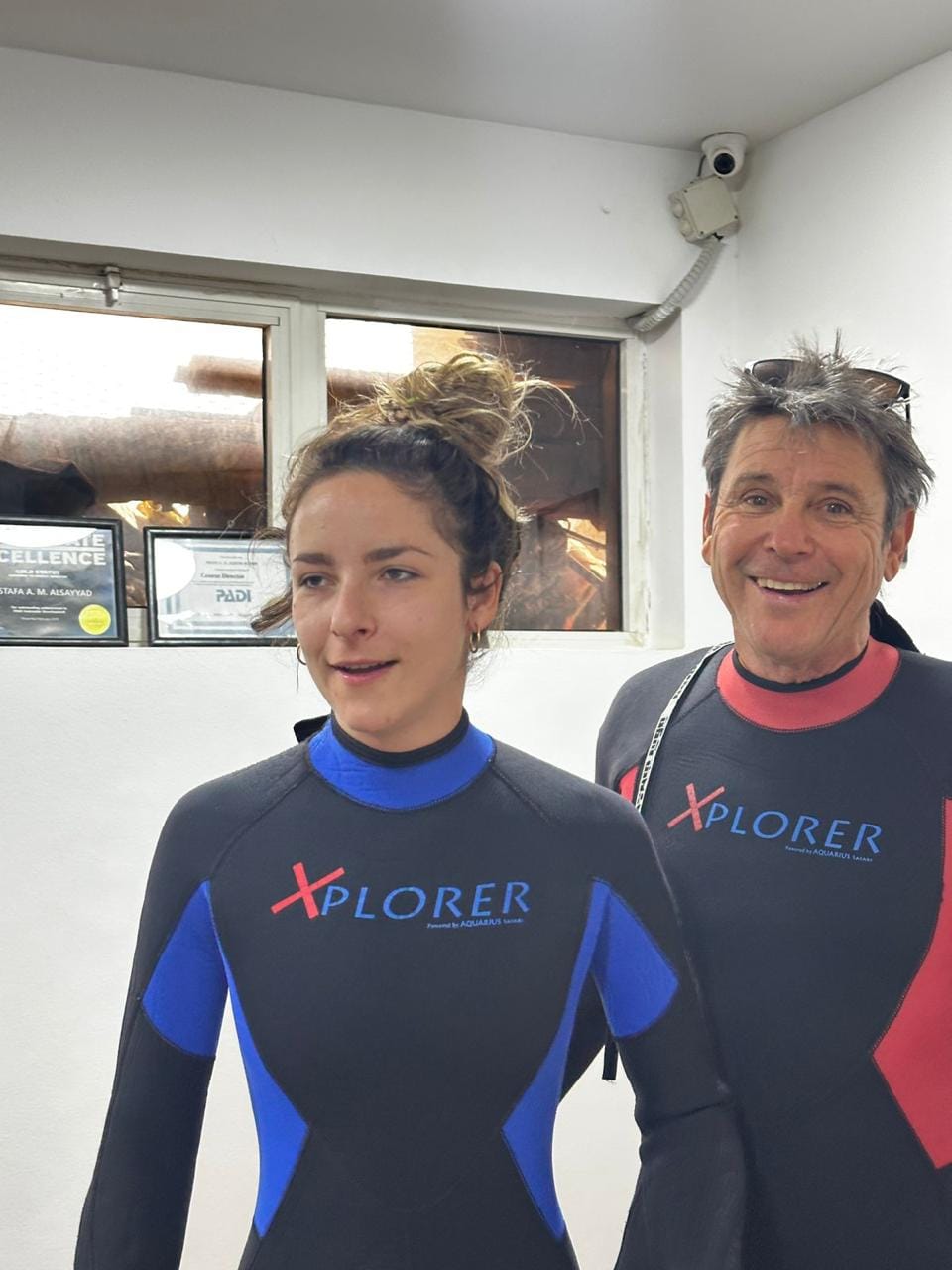
Choosing the right wetsuit for the Red Sea can feel like a puzzle. Between the warm summer waters, deep dives, and liveaboard trips, it’s hard to know which thickness to go for. Here is a simple and practical guide to help you make the right choice, all year round, with Xplorer Red Sea.
🌡️ Red Sea Water Temperatures
The Red Sea is a tropical destination, but water temperatures vary significantly between winter and summer. Here is an overview of water temperatures at Hurghada:
| Season | Period | Water Temperature | Recommended Thickness |
|---|---|---|---|
| Winter | December to March | 20°C – 24°C | 5 mm or 7 mm (with hood) |
| Shoulder Season | April to May & October to November | 23°C – 27°C | 3 mm to 5 mm |
| Summer | June to September | 26°C – 30°C | 3 mm (or shorty 1-2 mm) |
At greater depths (15–20 meters), the temperature can drop by about 1°C, especially in summer, and colder thermoclines may be encountered at some sites.
🧐 Which Thickness to Choose by Season?
❄️ Winter (December to March) – 5 mm or 7 mm
Winter is the coolest period. Water can drop to 20-22°C. To stay comfortable, a 5 mm wetsuit is the minimum recommended. If you tend to feel the cold easily or if you’re doing multiple dives per day, go for a 7 mm or even a semi-dry suit.
Tip: Don’t forget the hood! It is essential to prevent heat loss and ear infections.
🌤️ Shoulder Season (April-May & October-November) – 3 mm to 5 mm
Temperatures are pleasant, between 23°C and 27°C. A 3 mm wetsuit suits most divers. If you are sensitive to cold or if you dive multiple times per day, a 5 mm remains a safe choice to stay warm throughout the day.
☀️ Summer (June to September) – 3 mm or Shorty
Water easily reaches 28-30°C, like a warm bath. A shorty or a 3 mm full suit is perfect to protect against the sun, jellyfish stings, and coral abrasions.
⚠️ A Often Overlooked Factor: Multiple Dives on a Liveaboard
On a liveaboard safari with Xplorer Red Sea, you will do up to 3 or 4 dives per day. This repetition of dives lowers your body temperature more quickly. Even in summer, a 5 mm may be more comfortable than a 3 mm for divers who get cold easily.
🎯 The Golden Rule: Better Too Warm Than Too Cold
As our Xplorer Red Sea guides say: “You can always unzip your suit to let some water in if you’re too warm, but once you’re cold at 20 meters, it’s too late.”
📋 Summary Table (Xplorer Red Sea Recommendations)
| Period | Water | Recommended Thickness | The Extra Touch |
|---|---|---|---|
| December – March | 20–23°C | 5 mm or 7 mm | Hood & vest mandatory |
| April – May | 23–27°C | 3 mm to 5 mm | 5 mm for cold-sensitive divers |
| June – September | 26–30°C | 3 mm (or shorty) | Protection against sun & coral |
| October – November | 23–27°C | 3 mm to 5 mm | Ideal for 5 mm on liveaboard |
💡 Final Word
The Red Sea is accessible all year round. With the right advice, you will fully enjoy your dives. Whether you choose a 3 mm in summer or a 7 mm in winter, the important thing is to be comfortable and well protected. And if you have any doubts, Xplorer Red Sea can advise you on site and offer you a wetsuit rental adapted to the season.
Ready to dive? Contact us to book your safari with Xplorer Red Sea. 🐠🤿