Introduction
Egypt’s Red Sea, famous for its crystal-clear waters and vibrant coral reefs, faces a silent yet devastating challenge: coral bleaching. This phenomenon, affecting marine ecosystems worldwide, threatens one of Egypt’s most precious natural treasures.
What is Coral Bleaching?
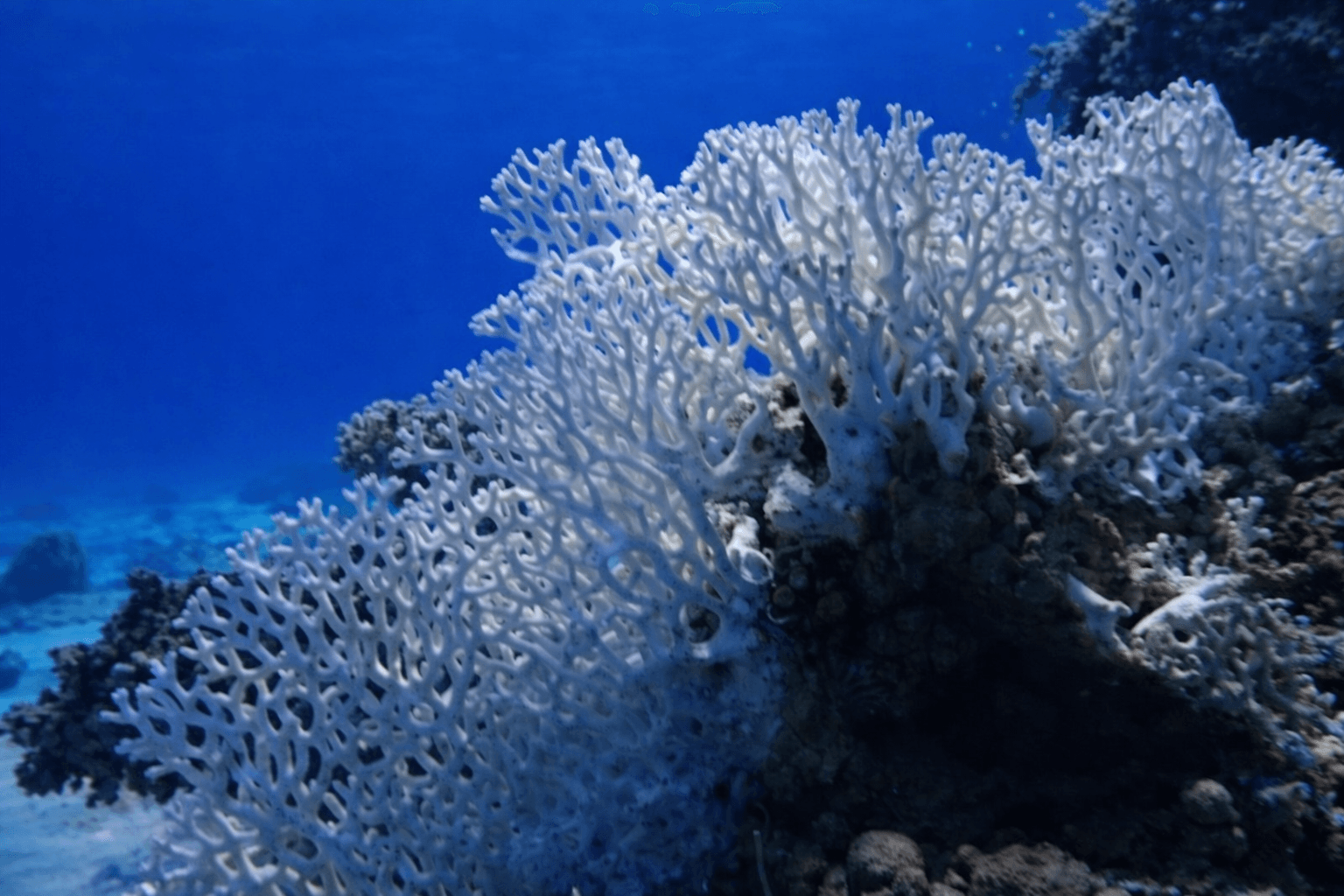
Bleaching occurs when corals, stressed by environmental changes, expel the symbiotic algae (zooxanthellae) that live in their tissues and give them their vibrant colors. Deprived of this essential food source, corals turn white and become more vulnerable to disease and death.
Causes in the Red Sea
In Egypt’s Red Sea, several factors contribute to this phenomenon:
- Rising temperatures: The Red Sea is warming 1.5 times faster than the global average
- Mass tourism: Overcrowding at dive sites disrupts ecosystems
- Coastal pollution: From hotels, boats, and land-based activities
- Destructive fishing: Although regulated, some practices persist
Focus on Southern Egypt: Fury Shoal and St. John’s
A Contrasting Situation
Over the past two years, the southern regions of Egypt’s Red Sea, particularly Fury Shoal and St. John’s, have experienced significant bleaching events. However, the recovery differs markedly between these two areas:
St. John’s: An Encouraging Recovery
- The depth characteristic of St. John’s sites played a key role
- Deeper waters maintained cooler temperatures
- A good recovery is observed, with many corals regaining their colors
- Biodiversity remains remarkable with “plenty of species as usual”
Fury Shoal: A Slower Recovery
- Unfortunately, this area has not yet recovered at the same pace
- The exact factors behind this difference are under study
- The sensitivity of species specific to this area might be a factor
The Big Question: Is It Worth Diving at St. John’s?
ABSOLUTELY YES!
Here’s why St. John’s remains an exceptional dive destination:
- Demonstrated Resilience: The natural recovery proves this ecosystem’s robustness
- Preserved Biodiversity: “Plenty of species as usual” – marine life is still abundant
- Site Quality: The drop-offs, arches, and deep reefs offer underwater landscapes that are “always beautiful”
- Ecological Awareness: Your (responsible) visit supports the local economy and justifies conservation efforts
Tips for Responsible Diving at St. John’s
- Choose dive centers committed to conservation
- Strictly maintain distance from corals
- Report any bleaching observations to your guide
- Consider participating in citizen monitoring programs
The Red Sea Exception: A Ray of Hope?
Fascinating fact: some studies suggest that corals in the Gulf of Aqaba, in the northern Red Sea, might be more resistant to warming. These “super corals” have developed exceptional thermal tolerance, offering hope for global conservation. The resilience observed at St. John’s strengthens this hope.
Impact on Egypt
Ecological
- Loss of marine biodiversity (25% of marine species depend on reefs)
- Collapse of the marine food chain
Economic
- Threat to tourism (diving and snorkeling represent a significant part of Egyptian tourism)
- Impact on local fisheries
Social
- Risk to coastal communities dependent on the sea
Conservation Initiatives in Egypt
Fortunately, actions are underway:
- Marine Protected Areas: Ras Mohammed National Park and other protected zones
- Tourism Regulation: Limiting visitor numbers, prohibiting anchoring on corals
- Restoration Programs: Coral farms and transplantation
- Scientific Monitoring: Precise tracking of areas like Fury Shoal and St. John’s to adapt strategies
- Awareness Raising: Training for dive guides and tourists
What Can We Do?
As Tourists
- Choose eco-responsible operators
- Do not touch or walk on corals
- Use coral-friendly sunscreen
- Maintain distance and avoid feeding fish
As Citizens
- Reduce our carbon footprint
- Support marine conservation organizations
- Raise awareness among our circles
Conclusion
The contrasting cases of Fury Shoal and St. John’s teach us an important lesson: each ecosystem reacts differently to environmental stressors. While Fury Shoal still requires our attention and enhanced protective measures, St. John’s demonstrates remarkable resilience that deserves to be celebrated and supported.
Diving at St. John’s means witnessing the resilient beauty of the Red Sea and contributing to its preservation. Every responsible diver becomes an ambassador for these fragile yet extraordinary ecosystems.
Dive responsibly, preserve the resilient beauty of the Red Sea!